


 News Desk
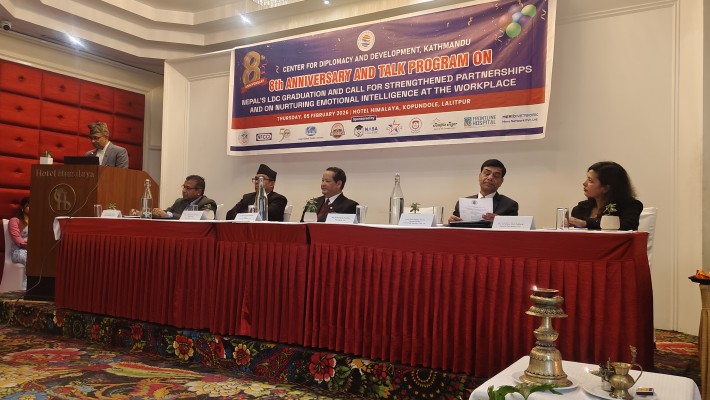
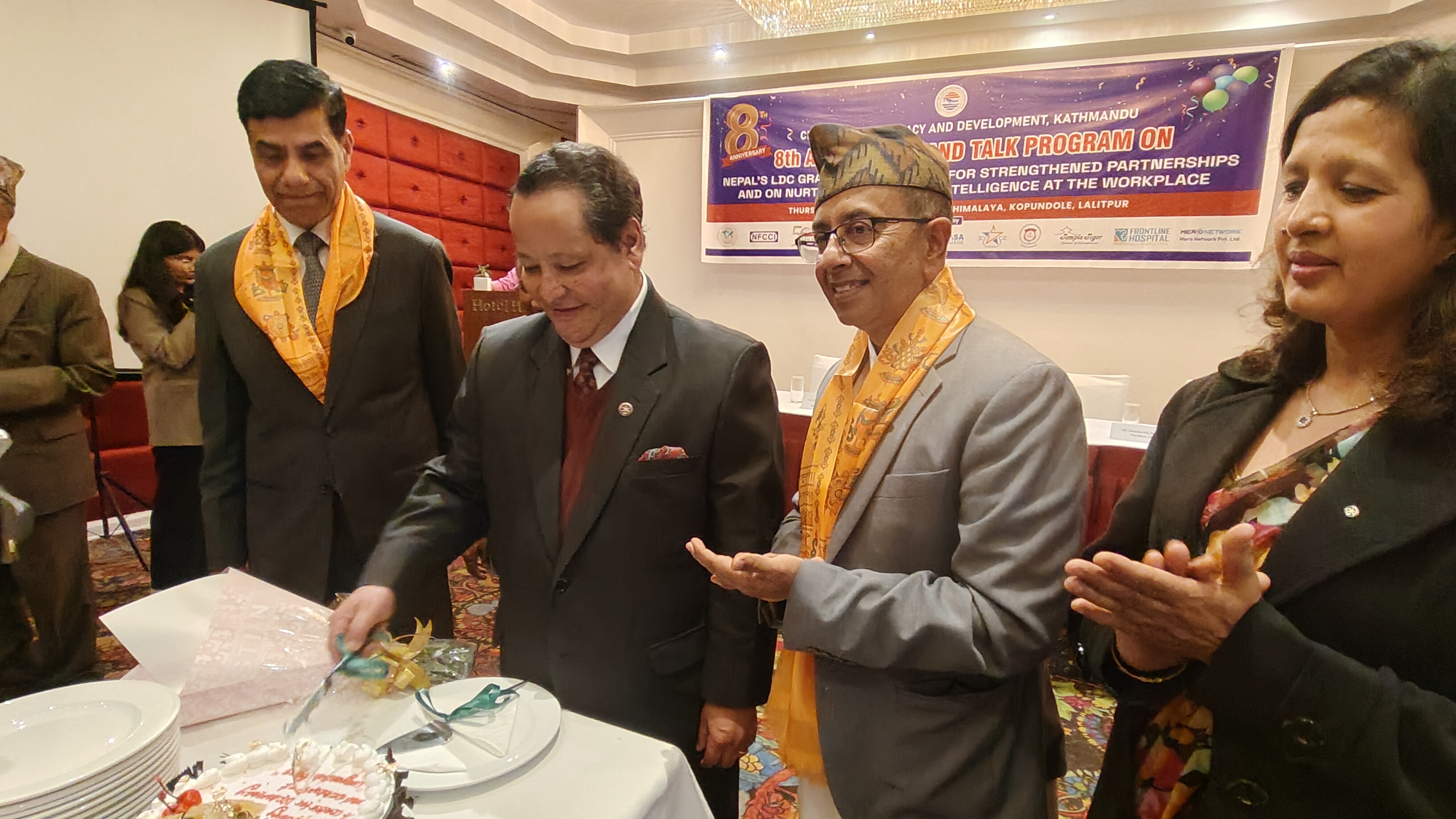
Kathmandu — The Center for Diplomacy and Development (CDD), Kathmandu, marked its 8th anniversary by organizing a talk program and policy dialogue on “Nepal’s LDC Graduation and the Call for Strengthened Partnerships.” The event was held on Thursday at Hotel Himalaya, Kupandole, Lalitpur, bringing together policymakers, diplomats, private sector leaders, experts, and development practitioners.
Delivering the welcome remarks, Founder President of CDD and former Ambassador Mohan Krishna Shrestha highlighted Japan as a strong example of how a country can rise from severe crisis, even after the devastation of the Second World War. He emphasized that Nepal is currently at a critical economic juncture and that sustainable economic progress can only be achieved through combined and coordinated efforts of both the government and the private sector. He also welcomed the distinguished guests and thanked them for their valuable presence.
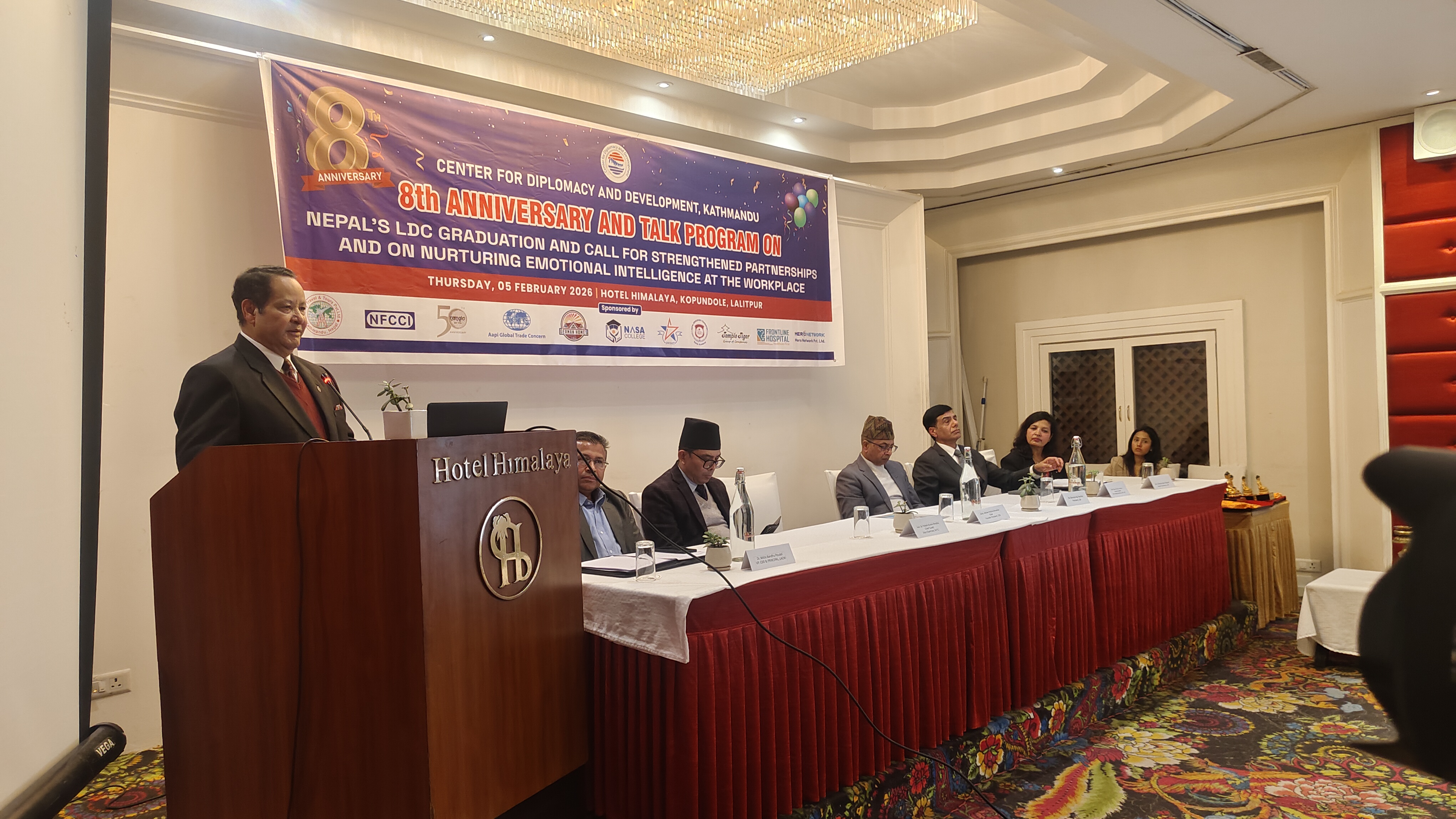
Chief Guest and Vice Chairman of the National Planning Commission, Dr. Prakash Kumar Shrestha, stated that Nepal’s graduation from the Least Developed Country (LDC) category involves both costs and benefits. He noted that while some strategic plans have been implemented, the overall progress reflects a mixed level of implementation. He informed that a readiness assessment report would be released soon, as it is currently being analyzed by an expert team. Dr. Shrestha also stressed that Nepal is highly vulnerable to climate change and warned that the trade and export sectors may face challenges after graduation. Geopolitical factors, political instability, and bureaucratic instability were also cited as key challenges, underscoring the need to enhance both bureaucratic and private sector capacity.
Guest of Honor and President of the Confederation of Nepalese Industries (CNI), Birendra Raj Pandey, underlined the importance of preparation and negotiation with the European Union and other international forums in the context of LDC graduation. He pointed out the role of commodity-based associations and sectors such as textiles, noting that there are also positive impacts of graduation. He added that Nepal continues to strive for export growth through regional frameworks such as SAFTA.
Former Foreign Secretary and former UN Under-Secretary-General, Ambassador Gyan Chandra Acharya, highlighted the wide gap that still exists among developing countries. He observed that Nepal has made significant progress over the past decades and is set to graduate from the LDC category in November 2026, transitioning from a low-income to a lower-middle-income country. However, he described economic transformation as a major challenge for Nepal. He emphasized the need to benefit from regional value chains while addressing environmental vulnerability, social integration, and policy reforms. According to him, LDC graduation is essential and carries positive impacts, including strengthening Nepal’s international image.
During the program, Dr. Mitra Bandhu Poudel, Vice President of CDD and Principal of LACM, delivered a presentation on “Nurturing Emotional Intelligence in the Workplace.” He highlighted the importance of emotional intelligence in enhancing leadership, organizational effectiveness, and a positive work culture.
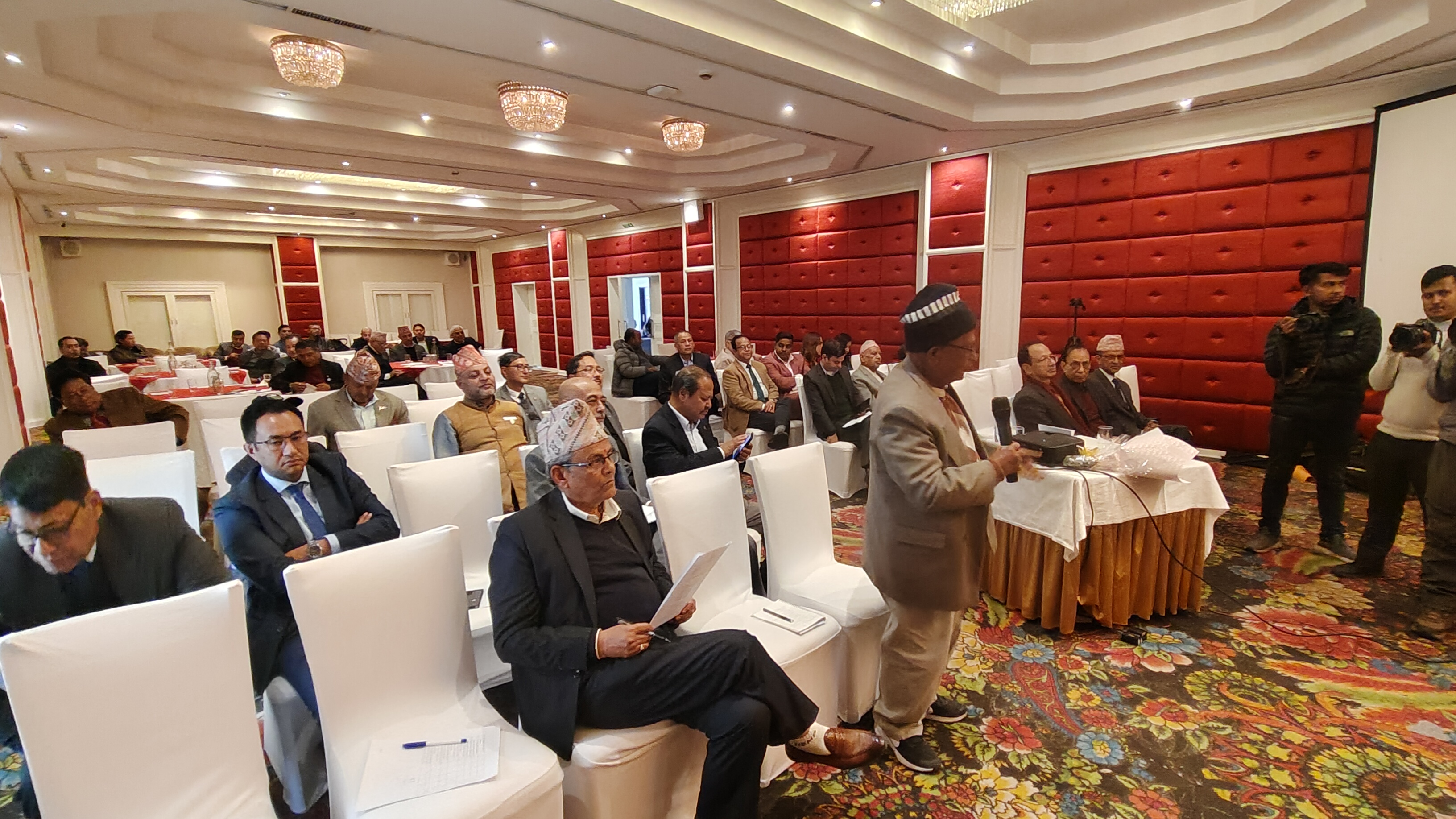
The program also included a question-and-answer session, a vote of thanks, presentation of tokens of love to distinguished guests, distribution of certificates of affiliation to new members, and a cake-cutting ceremony to mark CDD’s 8th anniversary.