

 News Desk
-Saroj Ojha
Nepal, a country with a rich history and culture, has continually grappled with political turmoil. The present scenario reflects a disheartening truth - the absence of true leadership. Instead, power brokers, greedy individuals, and national frauds have masqueraded as representatives of the people.
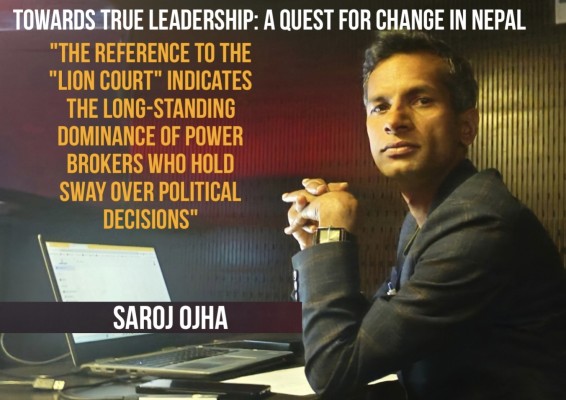
The reference to the "lion court" indicates the long-standing dominance of power brokers who hold sway over political decisions. These individuals, driven solely by personal gain, exercise undue influence over key governmental institutions. Their actions serve to consolidate power and lead to a lack of transparency, hinder progress, and perpetuate corruption
In the midst of Nepal's republic era, a sense of misery and disillusionment among the common citizens echoes the sentiments reminiscent of the previous monarchy. The republic, intended to be a symbol of freedom and democracy, has instead fostered an environment resembling a dictatorship. People delves into the deep-seated challenges plaguing Nepalese society, the growing disparity between businessmen and leaders, the corrosive effects of money in elections, and the need for a capable, courageous, and patriotic leader who can truly bring about transformative change.
I. Concentration of Wealth and Power:
One of the overarching concerns in contemporary Nepal is the disproportionate accumulation of wealth among a select few. As businesses struggle to prosper, leaders find themselves growing richer at the expense of the common citizen. This increasing wealth disparity undermines the very essence of a democratic society, breeding a sense of injustice and perpetuating systemic corruption.
II. Money and Political Representation:
The pervasiveness of money in electoral politics presents a formidable barrier for those without financial means. The dream of contesting elections without substantial financial backing becomes a near-impossible feat, leaving aspiring leaders from humble backgrounds marginalized and unable to participate meaningfully. This scenario undermines the principles of equal representation and fuels a system that thrives on elitism.
III. The Manipulation of Internal Party Dynamics:
Within political parties, the influence of money often leads to manipulation and the erosion of democratic values. Promising workers and dedicated members can easily become lost in the quagmire of factional interests, as only those who closely align with the leader's agenda or are willing to plead for help are granted access and recognition. Consequently, genuine meritocracy and internal democracy within parties suffer, hindering the overall progress and potential of the nation.
IV. The Urgent Need for Authentic Leadership:
Nepal, like many other countries in South Asia, yearns for an unwavering and patriotic leader who can break free from the traditional mold of leadership. This visionary leader should embody the qualities of fearlessness, integrity, and a steadfast commitment to the welfare of the people. By challenging the status quo, instilling hope, and prioritizing the improvement of citizens' lives, this leader can steer Nepal towards prosperity and transform the nation's political landscape.
V. Revitalizing the Nation:
To effect meaningful change, it is imperative to address the challenges stifling progress and impeding the citizens' well-being. A competent leader should strive to create an environment where basic necessities such as education and healthcare are not compromised. Simultaneously, sustainable governance, transparency, a conducive business environment, and industrialization should be prioritized to foster economic growth and discourage reliance on foreign nations for development and employment.
The current political scenario in Nepal is marked by the pervasive influence of power brokers and a dearth of genuine leadership. Greed, servitude, and a lack of accountability have hindered progress and left the citizens disillusioned. However, the yearning for transformative change persists. It is imperative for citizens to stand united, demand transparency, and actively participate in shaping their collective future. Only through genuine leadership can Nepal's great potential be realized, paving the way for a prosperous and inclusive nation.
The present scenario in Nepal demands a departure from traditional leadership styles and the emergence of a visionary leader. Escaping the grip of wealth concentration, an unwavering commitment to democratic principles, and efforts to bridge the socio-economic divide must become central tenets of leadership. It is through the pursuit of these ideals that Nepal can unlock its true potential, leading its citizens on a path towards progress, prosperity, and self-sufficiency.